
About this study
The name PROB-PROM is a combination of two key terms related to the study: PROB refers to the use of probiotics, and PROM stands for “Premature Rupture of Membranes.” The name PROB-PROM therefore reflects the research objective: to study the interest of vaginal probiotics after the rupture of the water sac.
Before preparing a larger essay in Canada to study the health of preterm birth by using vaginal probiotics in a few years, it appears necessary to realize a preparatory study, the PROB-PROM study. To assess feasibility, the number of people who refuse or agree to participate, or whether they complete the entire trial, will be counted, for example.

Why this study is important
Prematurity is the leading cause of perinatal mortality. Every year, millions of babies around the world are born prematurely, resulting in long-term medical complications and an emotional and financial burden for families. Preterm water breaking is the leading cause of prematurity, accounting for around 30% of cases.
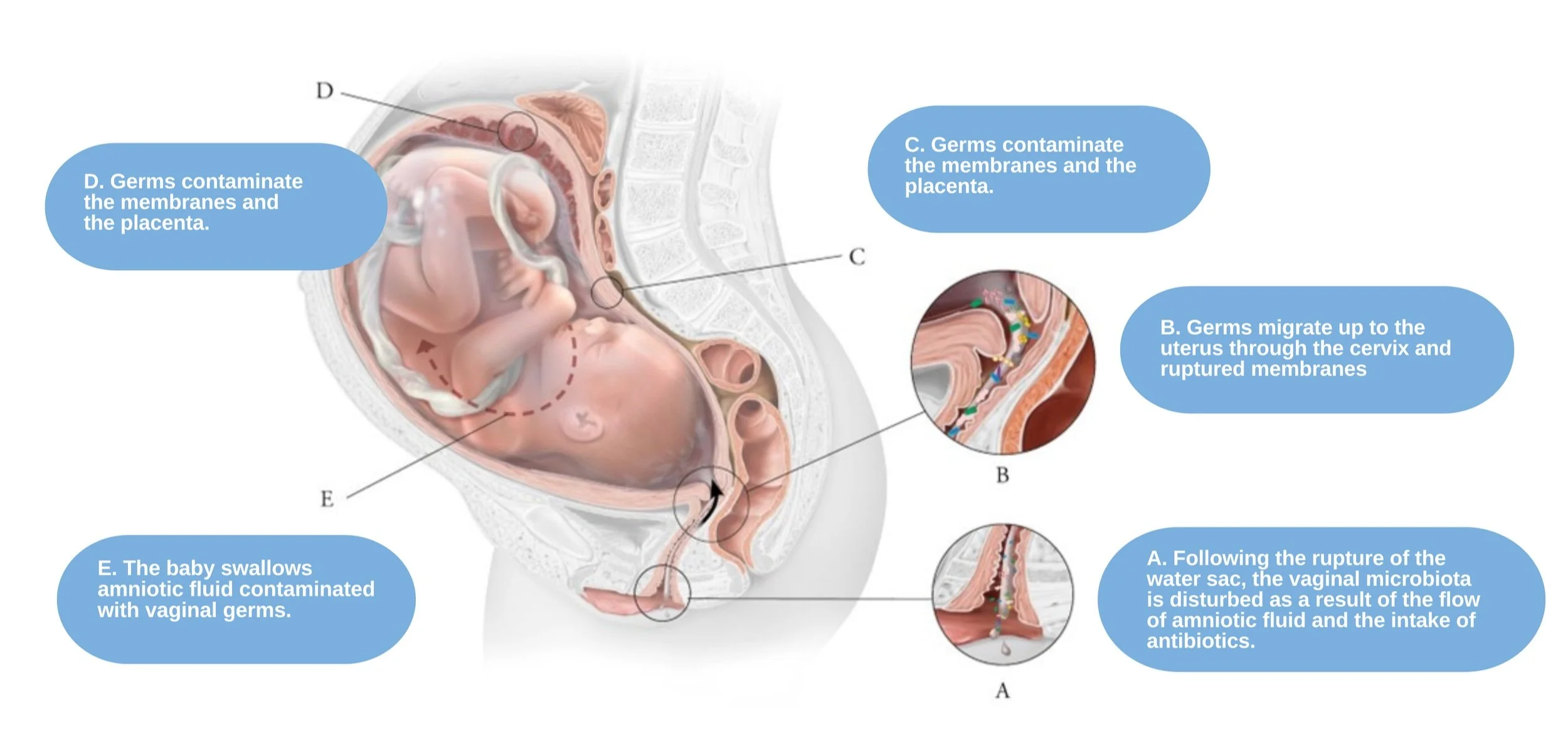
What happens when the water breaks?
When the sac ruptures (tiny cracks), bacteria from the vagina can migrate up into the uterus and cause serious infections such as chorioamnionitis. Antibiotics are commonly used to prevent these infections, as recommended by the Society of Obstetricians and Gynaecologists of Canada, but they also upset the natural balance of vaginal flora.
Fetal membrane rupture in pictures
What the science says
Studies* have shown the following:
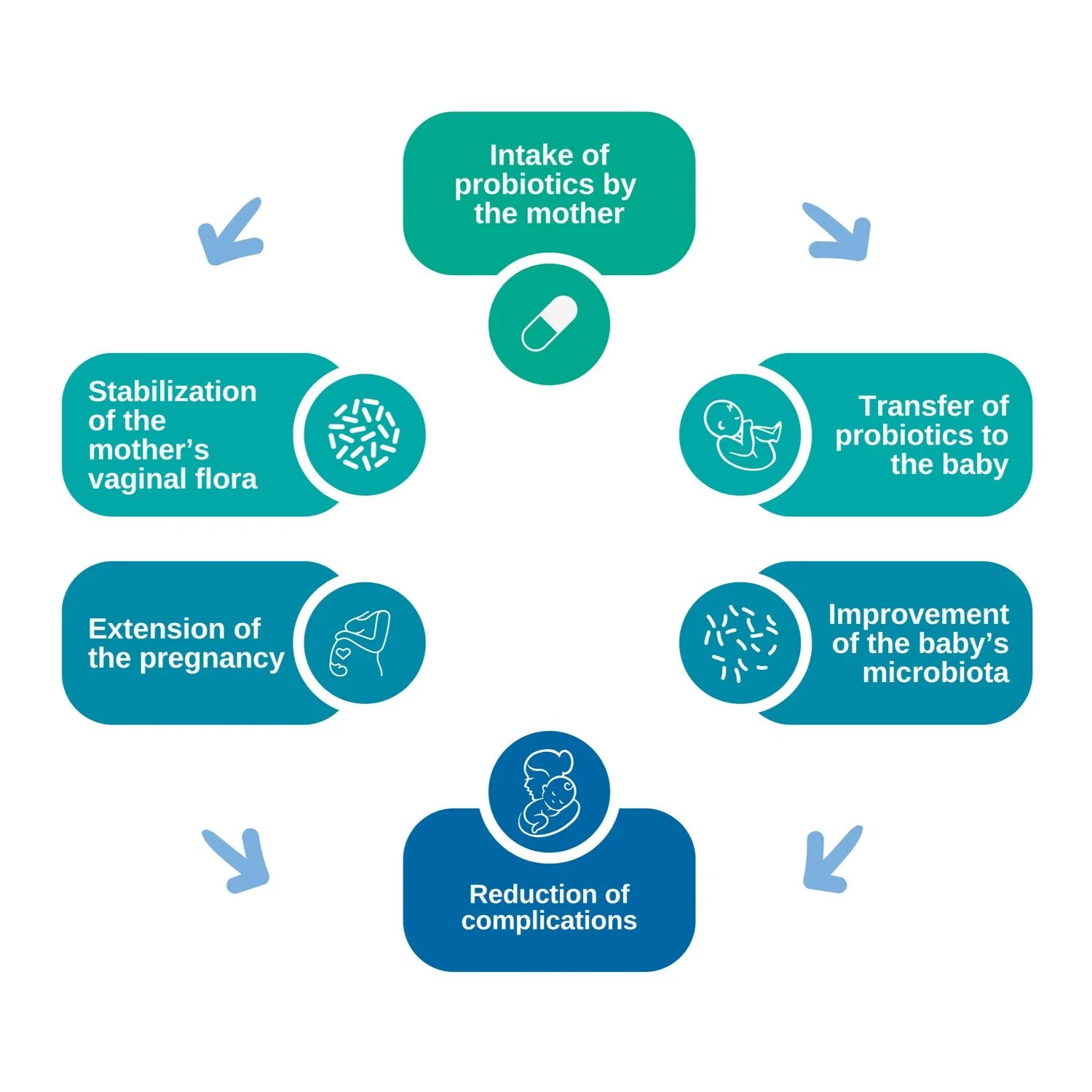
Taking vaginal probiotics after the water has broken can prolong the pregnancy.
Taking vaginal probiotics after rupture does not increase the risk of infection at term for either the mother or the newborn.
In this context, further studies are needed to confirm the beneficial effect of vaginal probiotics and to generalize the recommendation to use them.
Researchers want to know whether the use of vaginal probiotics by the mother creates a domino effect leading to reduced complications and, ultimately, improved health for both mother and baby.
Some definitions to better understand our study
-
The vaginal microbiota is the collection of microorganisms present in the vagina.
-
It acts as a line of defence against disease-causing germs in the vagina.
-
The baby’s intestinal microbiota is the collection of microorganisms present in the newborn’s intestine. The development of the microbiota is influenced by the mode of delivery (vaginal, Caesarean) and the intake of antibiotics.
-
These microorganisms play an essential role in the development of a baby’s immune system and overall health. Premature babies are at greater risk of developing infections and certain health problems, and the microbiota may be part of the solution.
-
Probiotics are live microorganisms which, when introduced in sufficient quantities, have positive effects on health*. They are used, for example, as an adjunct to treatment for bacterial vaginosis.
This study product is approved by Health Canada for commercialisation for vaginal health. Health Canada had authorized this use for the study.
*Hill C, Guarner F, Reid G, et al. Expert consensus document. The International Scientific Association for Probiotics and Prebiotics consensus statement on the scope and appropriate use of the term probiotic. Nat Rev Gastroenterol Hepatol. 2014;11(8):506-514. doi:10.1038/nrgastro.2014.66
-
A synthetic substance that destroys or inhibits the growth of bacteria.
-
An infection of the placenta that can cause premature birth.
Would you like to know more?
*Moraes DV de, Queiroz DB de, Eleutério J. Vaginal probiotics on the outcomes of premature rupture of membranes: a pilot randomised clinical trial. J Obstet Gynaecol J Inst Obstet Gynaecol 2023:2151349. https://doi.org/10.1080/01443615.2022.2151349.
*Yadav J, Das V, Kumar N, Agrawal S, Pandey A, Agrawal A. Vaginal probiotics as an adjunct to antibiotic prophylaxis in the management of preterm premature rupture of the membranes. J Obstet Gynaecol J Inst Obstet Gynaecol 2022;42:1037–42. https://doi.org/10.1080/01443615.2021.1993803.
*Daskalakis GJ, Karambelas AK. Vaginal Probiotic Administration in the Management of Preterm Premature Rupture of Membranes. Fetal Diagn Ther 2017;42:92–8. https://doi.org/10.1159/000450995.
*Kahvazi F. The Effects of Vaginal Probiotic Administration on Perinatal Outcomes in Patients with Premature Preterm Rupture of Membrane. Arch Obstet Gynecol 2022:59–63